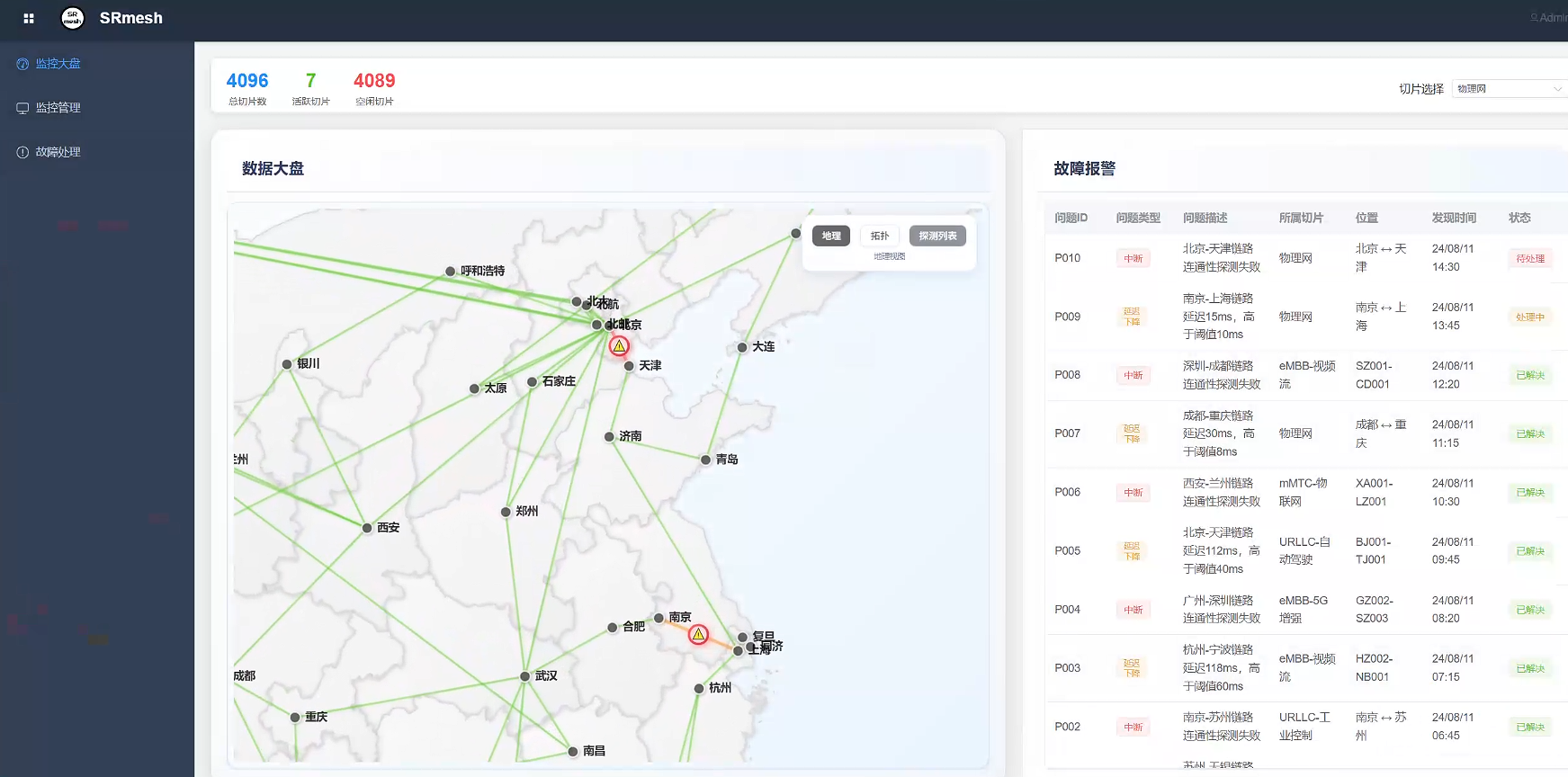
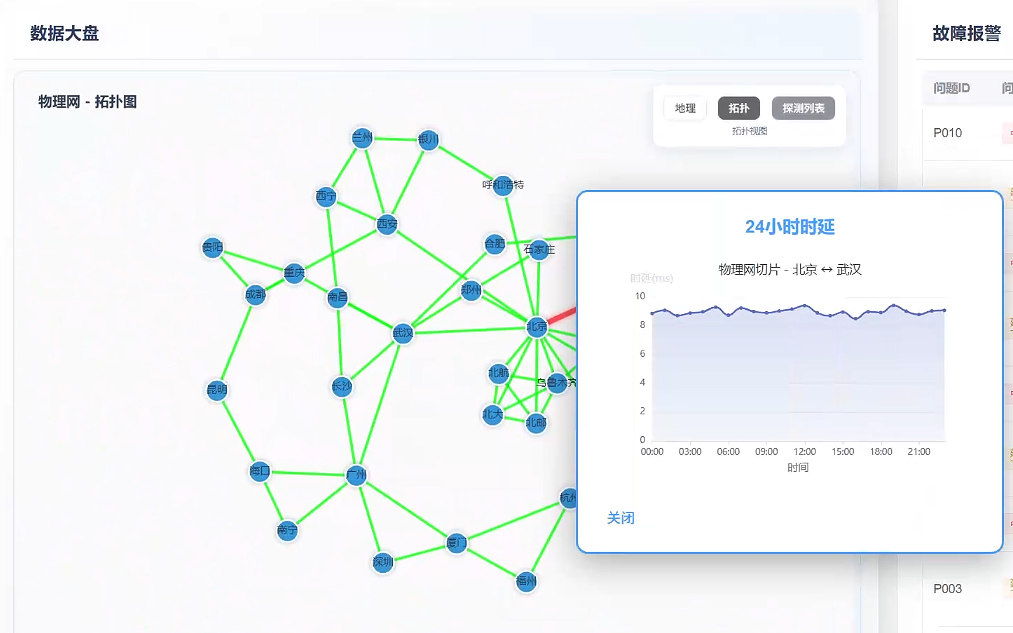
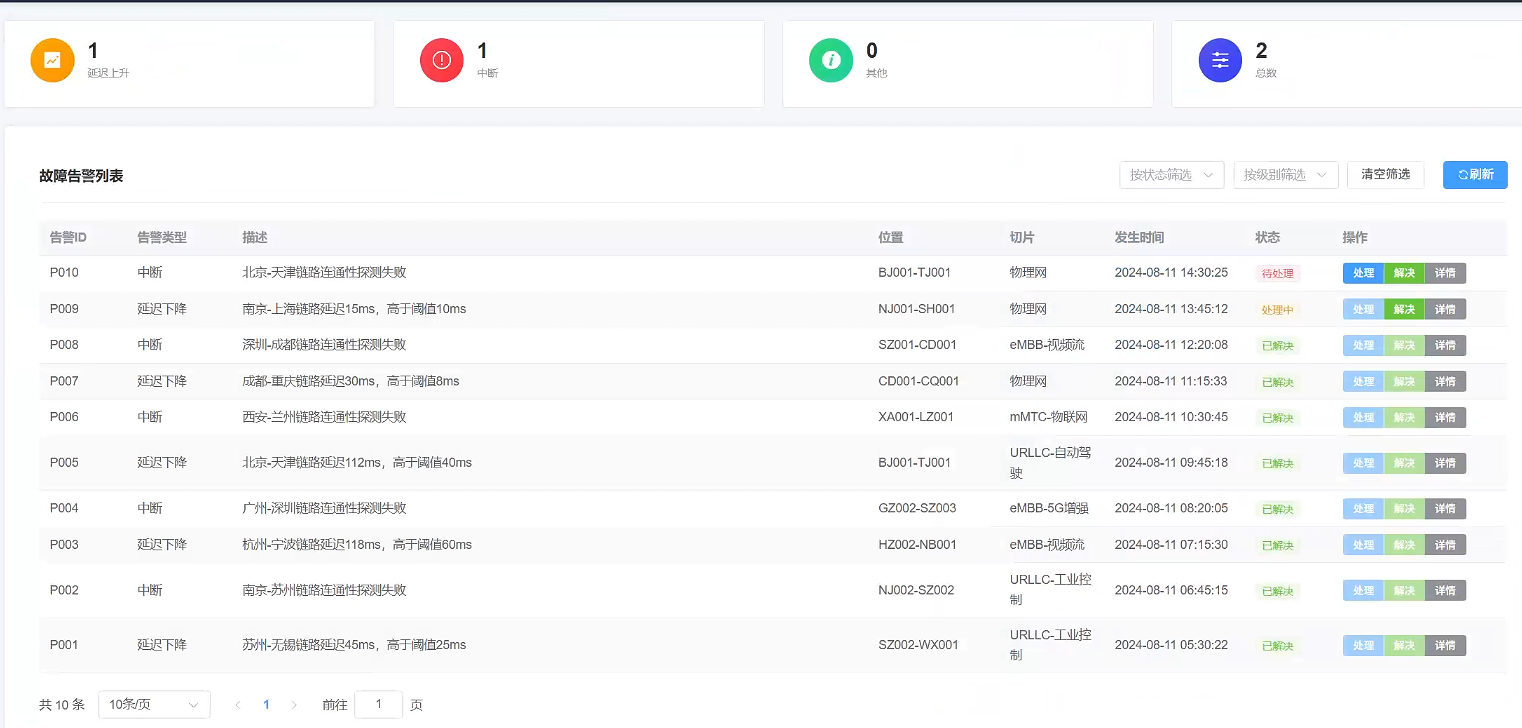
Segment Routing over IPv6 (SRv6) has attracted significant attention from network operators. Diagnosing performance bottlenecks for SRv6 tunnels is critical to maintaining network quality. However, SRv6 introduces priority policies, special forms of multipath routing, and SR-based network slicing, all of which make existing methods difficult to apply.
In this paper, we present SRMesh, a framework for diagnosing latency bottleneck links specifically tailored for SRv6 tunnel performance analysis. Our approach features three key innovations:
SR-based Probing
Deterministically control routing paths and ensure probe packets emulate real production traffic.
Latency-based Multipath Inference
Resolve routing ambiguities caused by SR through intelligent latency analysis.
Progressive Diagnosis
Incrementally reuse probe results to reduce redundant measurements.
We implement a prototype of SRMesh and conduct extensive evaluations on real network topologies. The results demonstrate that SRMesh achieves high diagnostic accuracy with up to a 91.9% reduction in probe overhead, proving its practicality and scalability in large-scale SRv6 environments.